Disclaimer: Information may be subject to change and should be verified independently.
Why Drivers in the UAE Tint Their Car Windows
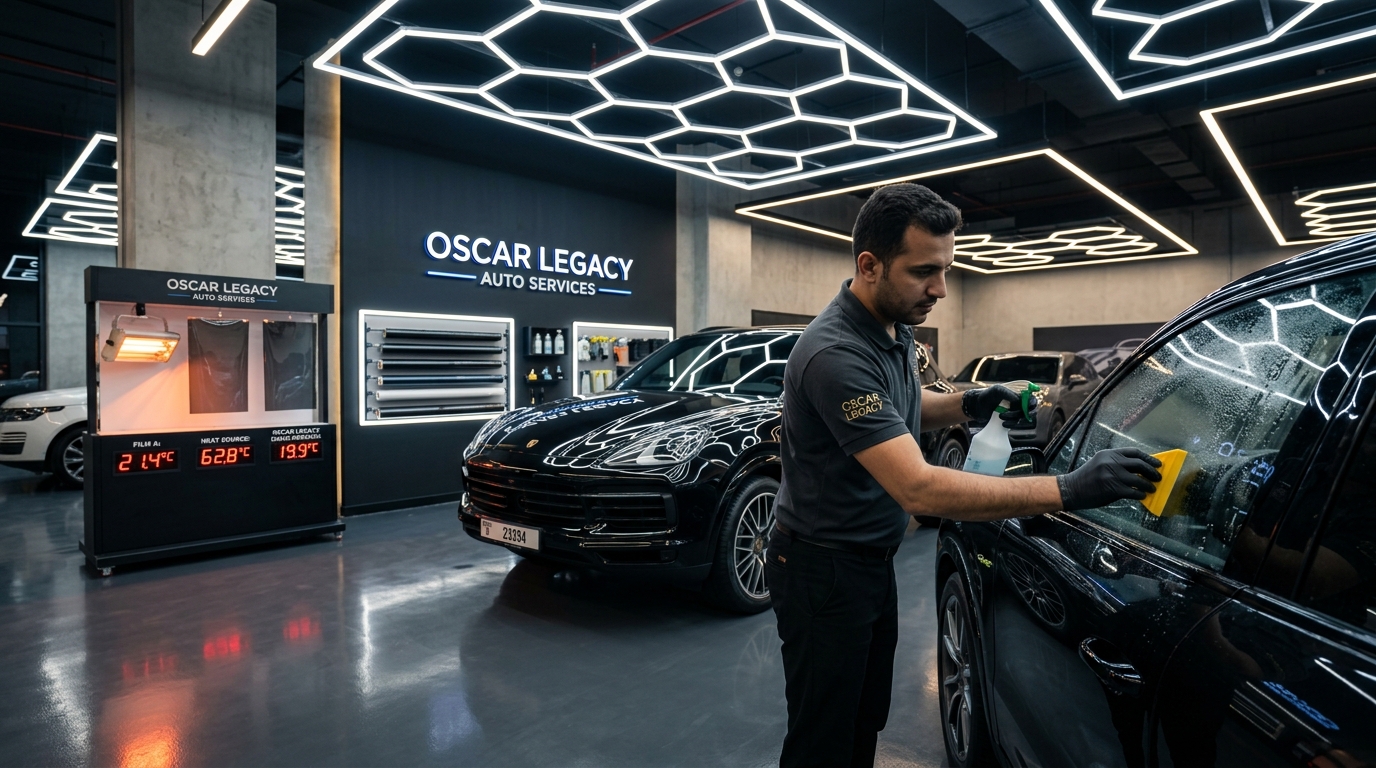
Window tinting is a ubiquitous sight across the UAE. Between punishing summer heat that regularly eclipses 50°C (122°F), blinding desert solar glare, and a cultural appreciation for privacy, high-performance automotive window film is practically essential equipment. An untinted vehicle parked in Dubai midday direct sunlight for merely 20 minutes can see cabin temperatures soar past 68°C.
A premium, certified window film mitigates these harsh conditions in four critical ways:
Air Conditioning Efficiency
Advanced nano-ceramic films reject up to 98% of solar infrared rays, cooling your cabin 60% faster and drastically reducing compressor strain and fuel consumption.
UV Leather Preservation
Blocks 99% of harmful UVA/UVB rays, preventing luxury leather cracking, Alcantara fading, and dashboard warping caused by solar exposure.
Glare & Eye Strain Reduction
Cuts harsh sunlight reflection off desert tarmac and windshield reflections on high-speed motorways like Sheikh Zayed Road and E11.
Security & Peace of Mind
Prevents opportunistic passersby from peering into the rear cabin, keeping personal belongings and executive passengers discreetly shielded.
UAE Car Window Tinting Rules Explained: The 50% Law
Under amended Federal Traffic Law (Ministerial Resolution No. 178), the UAE government officially standardized window tinting regulations across all seven Emirates. The law balances passenger thermal comfort with traffic safety and law enforcement visibility:
| Window Location | Private Vehicles (Cars & SUVs) | Commercial & Fleet Vehicles |
|---|---|---|
| Front Side Windows (Driver & Passenger) | Up to 50% Tint Allowed | 0% Tint (Must remain clear) |
| Rear Side Windows | Up to 50% Tint Allowed | Strictly regulated by RTA trade license |
| Rear Windscreen | Up to 50% Tint Allowed | 0% Tint (Must remain clear) |
| Front Windshield | 0% Tint Strictly Enforced (Top 15cm visor strip only) | 0% Tint Strictly Enforced |
The front windshield is treated with utmost scrutiny because it governs the driver's primary line of sight. Full front windshield tinting of any darkness is illegal in the UAE. The only permitted exception is a non-reflective sunstrip visor along the very top edge (not exceeding 15 cm), provided it does not encroach into the windshield wiper sweep zone.
Dubai vs. Abu Dhabi Window Tinting Regulations
Historically, Abu Dhabi and Dubai maintained differing regulations—Abu Dhabi previously permitted only 30% tint, while Dubai allowed 50%. Today, under revised federal traffic directives, the 50% maximum limit is standardized across all seven Emirates (Dubai, Abu Dhabi, Sharjah, Ajman, Umm Al Quwain, Ras Al Khaimah, and Fujairah).
However, enforcement nuances exist:
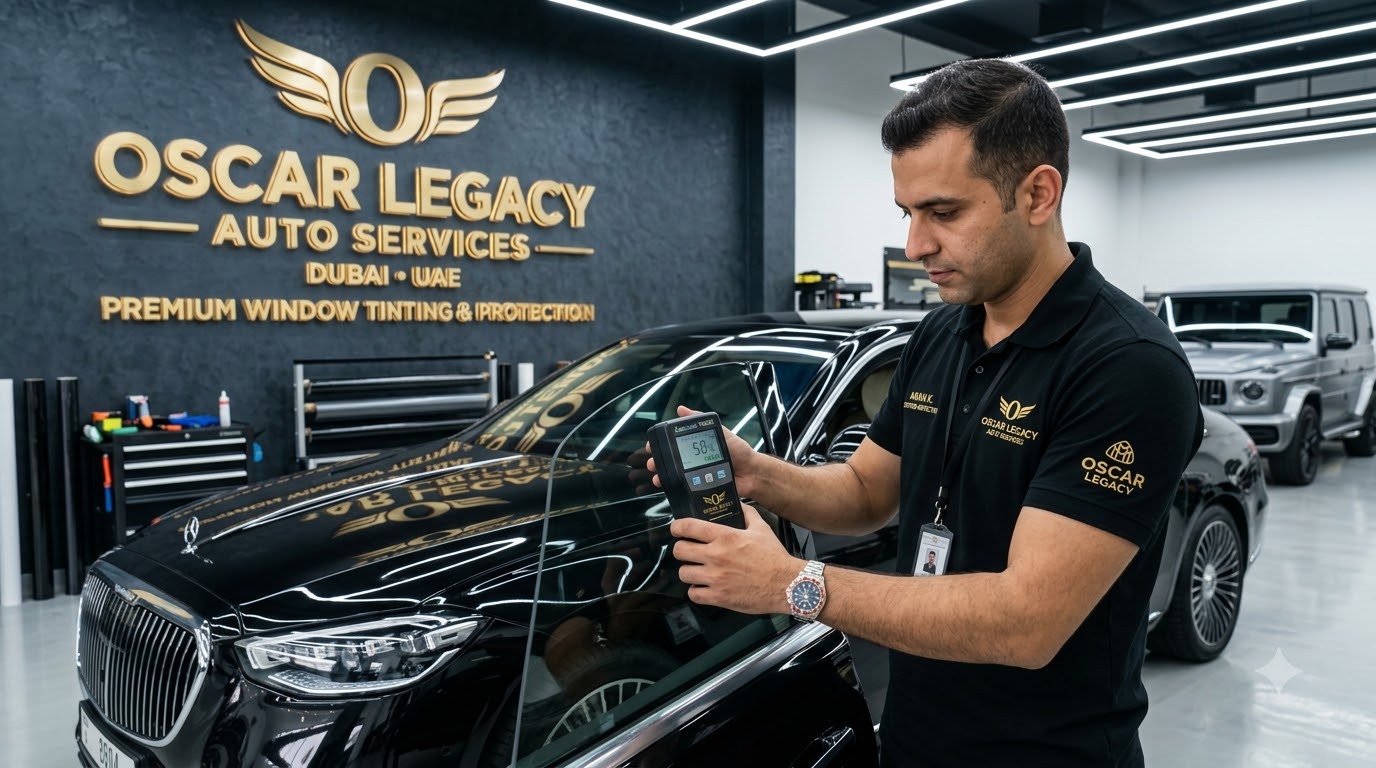
- Dubai (RTA Inspection): RTA testing bays (Tasjeel, Shamil) use handheld electronic photometers during annual registration renewal. If your glass reads below 50% Visible Light Transmission, the vehicle fails immediately.
- Abu Dhabi (ADNOC & Smart Patrols): Abu Dhabi Police deploy roadside photometers and smart traffic camera networks capable of detecting excessive tint density on highways.
What Does VLT (Visible Light Transmission) Mean?
One of the most frequent mistakes motorists make is confusing tint darkness percentage with Visible Light Transmission (VLT):
| Term | What It Actually Measures | UAE Legal Context |
|---|---|---|
| 50% Visible Light Transmission (VLT) | 50% of external visible light passes through the glass into the cabin. | 100% Legal Maximum in UAE |
| 30% VLT (Darker) | Only 30% of light passes through (70% blocked). | Illegal for private cars without medical permit |
| 70% VLT (Lighter) | 70% of light passes through (subtle, light shade). | 100% Legal (Ideal for night driving) |
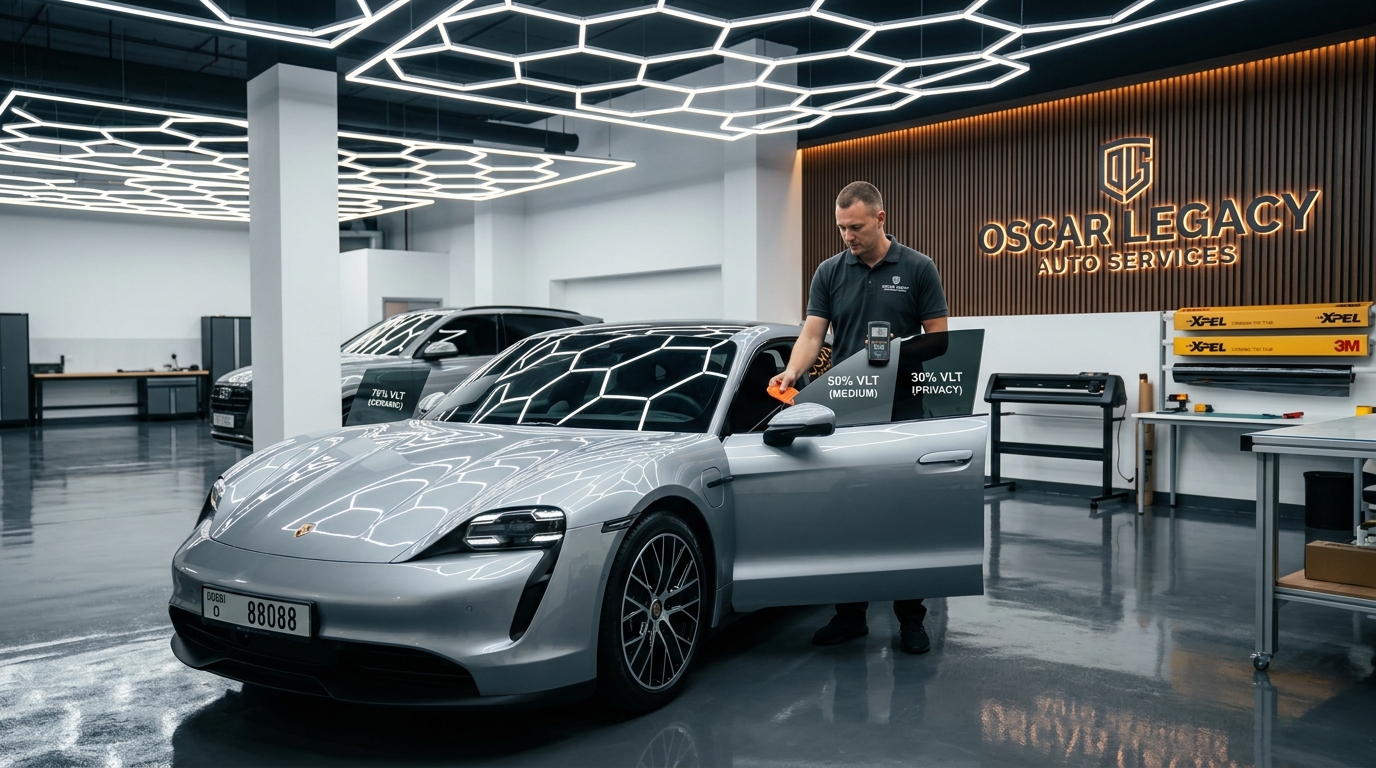
Many premium SUVs (Range Rover, Mercedes G-Wagon, Porsche Cayenne) come from the factory with rear privacy glass already tinted to 70% darkness (30% VLT). If an installer adds an aftermarket 50% film on top of that, the combined reading drops to a dangerously illegal 15% VLT, guaranteeing an AED 1,500 fine and RTA inspection failure unless the existing factory glass is metered with a certified photometer prior to film installation.
Fines & Penalties for Illegal Window Tinting in the UAE
UAE traffic authorities enforce strict penalties against non-compliant window films under Article 90 of the Federal Traffic Law:
| Traffic Violation | Financial Fine | Vehicle Impoundment | Black Points |
|---|---|---|---|
| Exceeding 50% tint darkness | AED 1,500 | 30 Days (Discretionary) | 0 to 4 Points |
| Tinting the front windshield | AED 1,500 | Immediate removal ordered | Recorded in traffic file |
| Unauthorized commercial vehicle tint | AED 1,500 | Vehicle impounded until stripped | Commercial fine |
| Using reflective mirror / chrome tint | AED 1,500 | Mandatory on-the-spot peel | Traffic violation |
How to Choose the Right Tint: Why Nano-Ceramic Wins
Many drivers believe that darker tint equals cooler cabin. This is a myth. Traditional dyed films darken the glass but absorb heat, radiating it straight into the car.
In contrast, multi-layer Nano-Ceramic film uses microscopic ceramic nanoparticles that are non-conductive and non-metallic. A 50% legal nano-ceramic film blocks over 98% of Infrared Heat (IR) and 99% of UV rays, outperforming illegal 90% "limo" dyed films while keeping you 100% compliant with RTA standards!
Because nano-ceramic films contain no metallic particles, they cause zero interference with your Salik toll tags, GPS navigation systems, Apple CarPlay, keyless entry, or mobile phone signals.
Upgrade to Certified RTA-Compliant Nano-Ceramic Tint
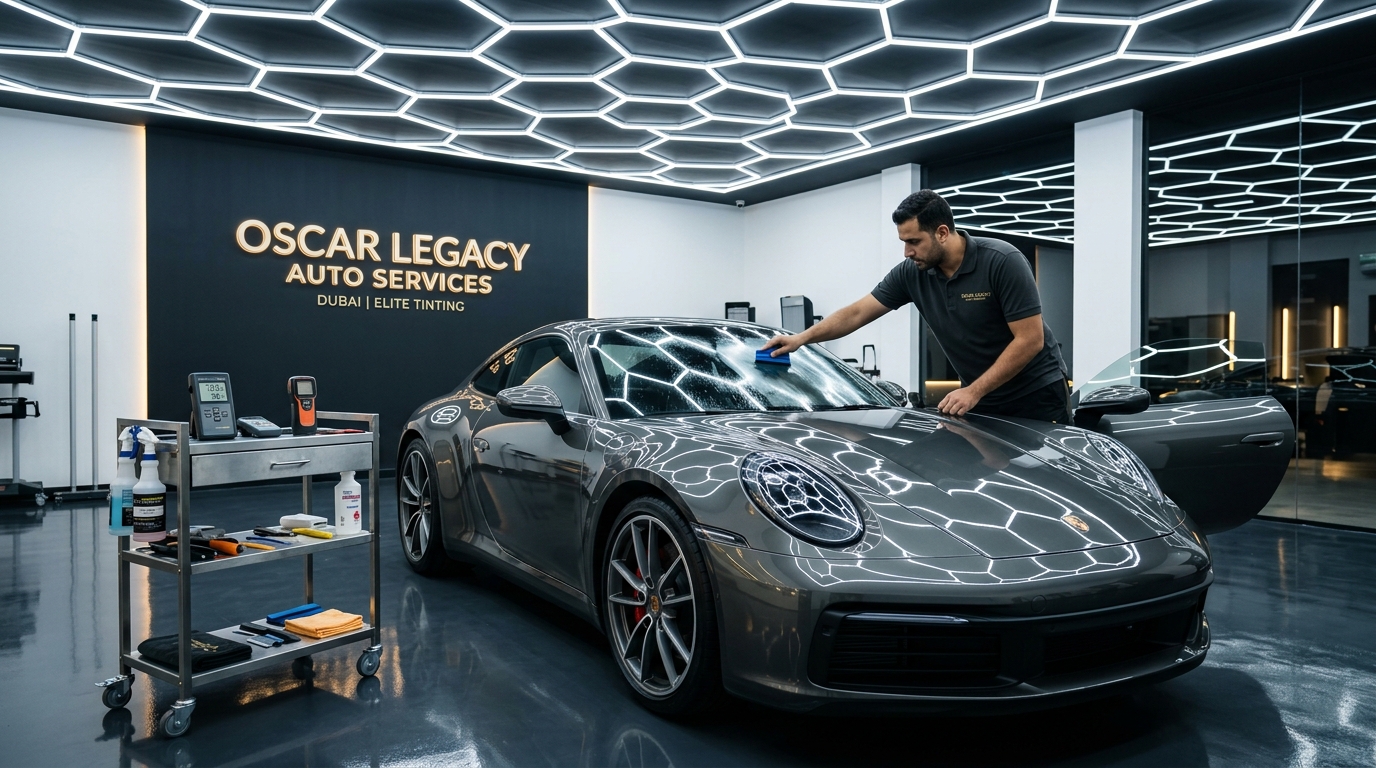
Protect your interior, slash cabin temperatures by up to 60%, and stay 100% compliant with UAE traffic laws. Installed with computer CAD plotters and certified digital VLT light meters in Al Quoz, Dubai.
Frequently Asked Questions: UAE Window Tinting Rules
Can I get special permission for darker than 50% tint in Dubai?
Yes, but only under specific certified circumstances. The RTA and Dubai Police issue special dark tint permits for individuals with documented medical conditions (such as severe skin disorders or extreme light sensitivity certified by a UAE health authority) or for high-level government, consular, and VIP security vehicles.
Is front windshield tinting ever permitted in the UAE?
Full windshield tinting is strictly prohibited. The only legal option is a top sunstrip visor not exceeding 15 cm in depth along the roofline. However, high-end studios install 100% optically clear ceramic heat-blocking films (70%–80% VLT with zero visible shade) to reject heat without altering optical clarity, subject to inspection guidelines.
What is the penalty if I fail the annual RTA technical inspection for tint?
If the RTA inspection photometer reads higher than 50% tint darkness on your vehicle, you will receive a test failure certificate. You must peel off the non-compliant film and return to the testing center for re-inspection before your Mulkiya registration can be renewed.
Are mirror or chrome reflective tints legal in Dubai?
No. Mirror, chrome, and high-reflectivity window films are strictly banned across the UAE. Under bright desert sunlight, reflective films cause blinding glare hazards for oncoming drivers, leading to immediate fines and forced film removal.
How long does professional window tinting take in Dubai?
A complete vehicle tint installation takes between 2 to 3 hours in our climate-controlled, dust-free studio in Dubai. We use computer CAD plotters to ensure zero razor blade contact with your glass and calibrate VLT with certified digital light meters.